
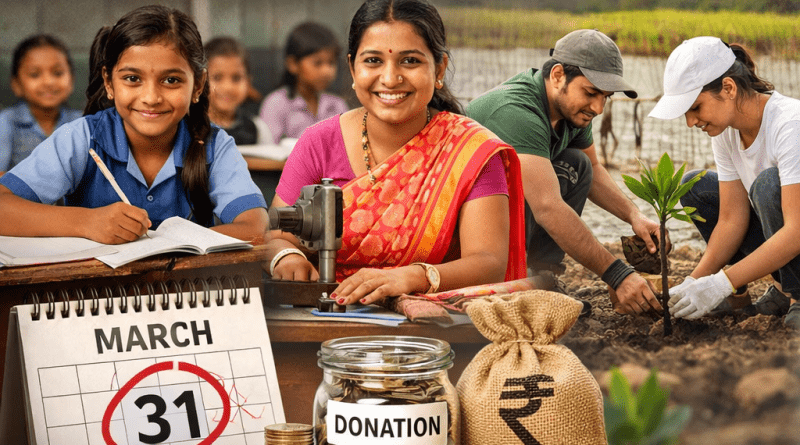
Donate Before March 31: Why End of Financial-Year Giving Matters for NGOs in India
Every year in March, many individuals review their finances.
Investments are checked. Expenses are assessed. Financial goals are recalculated before the new financial year begins.
For many years, charitable donations often appeared in this conversation because of tax benefits. A receipt collected before March 31. A deduction added to the list.
However, with the growing shift toward the new tax regime, the conversation around giving is beginning to change.
Giving is no longer just about tax planning.
Increasingly, it is becoming a conscious decision to support meaningful work in society and build a legacy through philanthropy.
If you are considering whether to donate before March 31, this moment offers an opportunity to reflect on the real impact that giving can create.
What Happens in the NGO Sector at the End of the Financial Year
While individuals reflect on financial decisions, NGOs across India are also going through an important period of review and planning.
At the end of the financial year, organisations assess the progress of their programs over the past twelve months. They evaluate how their work has impacted communities, identify challenges they encountered, and explore ways to strengthen their efforts.
At the same time, NGOs begin planning initiatives for the coming year. These may include:
- Education programs for students at risk of dropping out
- Livelihood training initiatives that empower women
- Environmental programs that restore and protect ecosystems
- Community support programs for vulnerable families and the elderly
In many ways, March is when NGOs begin preparing the work that will shape the coming year.
And planning meaningful programs requires something simple but powerful- confidence that support exists.
Why Individual Donors Matter for NGOs
Corporate CSR funding plays a vital role in supporting social initiatives in India. Yet individual donors remain equally important in sustaining nonprofit work.
Individual giving allows organisations to continue their work in several meaningful ways.
Ensuring continuity of programs
CSR partnerships usually follow structured approval processes and internal review cycles. Because of this, many NGOs receive institutional funding toward the end of the financial year.
However, programs on the ground must continue throughout the year.
Students must continue attending classes. Livelihood training programs must run. Community services must reach families who depend on them.
Individual donations often help NGOs sustain these programs between larger funding cycles, ensuring that important work continues without interruption.
Reaching communities that larger funding may not cover
Corporate funding is often designed around specific projects and geographic locations. While this helps achieve scale and accountability, some smaller or emerging needs may fall outside these structures.
Individual contributions provide NGOs with the ability to respond to such situations. This may include supporting a student who requires immediate assistance to continue school, helping a community initiative that requires modest funding, or enabling new programs that are still in their early stages.
In many cases, individual donors help NGOs reach people who might otherwise be left behind.
Providing flexibility to respond to urgent needs
Social challenges rarely follow predictable timelines.
Communities may face unexpected difficulties that require immediate support—whether it is education assistance, livelihood support, or emergency relief.
Institutional funding is often allocated for specific activities, but individual donations provide the flexibility NGOs need to respond quickly when urgent needs arise.
That flexibility often determines whether help reaches someone when it is needed most.
Moving Beyond Tax Benefits: Giving for Impact
For many donors, the first act of giving may have been influenced by tax incentives.
Over time, however, many people discover that the true value of giving extends far beyond financial considerations.
Supporting social initiatives contributes to building stronger communities. It helps organisations continue their work in education, livelihoods, environmental protection, and social welfare.
Giving becomes a way for individuals to participate in the collective effort of building a more equitable society.
Before March 31: An Opportunity to Make a Meaningful Contribution
As the financial year comes to a close, this moment offers an opportunity to reflect not only on financial planning but also on the role individuals can play in creating social impact.
Even a modest contribution can help sustain important work carried out by NGOs across India.
For those who have donated in the past, this is an opportunity to continue that commitment.
For others, it may be the right moment to begin.
And if you are reading this today, you are already closer to taking that step than most people.
Because a small decision made before March 31 can help shape meaningful impact for the entire year ahead.
Support Verified NGOs and Create Impact
If you are considering making a contribution before the financial year ends, explore credible and verified NGOs working across education, livelihoods, environmental protection, and community development.
Your support can help organisations continue the work that strengthens communities across India.
Sometimes the most meaningful decisions are not the ones that improve our balance sheets, but the ones that improve lives.
Read our latest blogs here:
- What NGOs Wish Donors Knew: 7 Things That Make Social Impact Harder Than It Looks.
- India’s Social Sector Funding Gap: Why NGOs Need Long-Term Donors More Than Ever.
- Top 10 Questions Donors Are Asking in 2026
- 2026 Philanthropy Trends Every Donor Should Know
- How to Choose a Credible NGO in 2026: A Donor’s Checklist
- What Happens After You Donate? A Transparent Look at NGO Spending
- India’s Giving Moment: How Individual Donors Are Powering Social Change
- From One-time Donations to Endowments: Why Long-term Funding Models Matter

